
Looking Up Your Logan Neighbors
A block lookup starts with the address you know. Search Cache GIS or CORE, record the parcel ID and the situs address, and then inspect the parcels that touch it. The result is a map and records workflow, not a public roster of Logan neighbors. The Cache GIS map menu includes parcel, zoning, voting, floodplain, survey, historical-road, historical-parcel, aerial, development-by-decade, and house-number layers. Use only the layer that answers the question.
| Source | What it shows about a block | Access |
|---|---|---|
| Cache GIS | Adjacent parcel shapes, layers, address and tax-ID map cards | Free viewer |
| CORE / Assessor | Parcel, tax year, owner and mailing/situs fields | Public search, 100 parcels/day |
| Recorder | Recorded instruments, plats, party and parcel context | Inspection or copy route |
| Logan planning documents | Adams, Bridger, Ellis, Hillcrest, Wilson, Woodruff areas | City plan, planning context |
| Public business or permit file | Entity, project, issuing municipality, or address fields | State or city route |
The first record shows the parcel. The next confirms the map. A recorded document or city file supplies a dated public event. A community plan supplies geography, not membership. This order keeps neighbor research tied to evidence instead of assumptions.
The GRAMA portal is the records-request route when a specific public block record is not online.
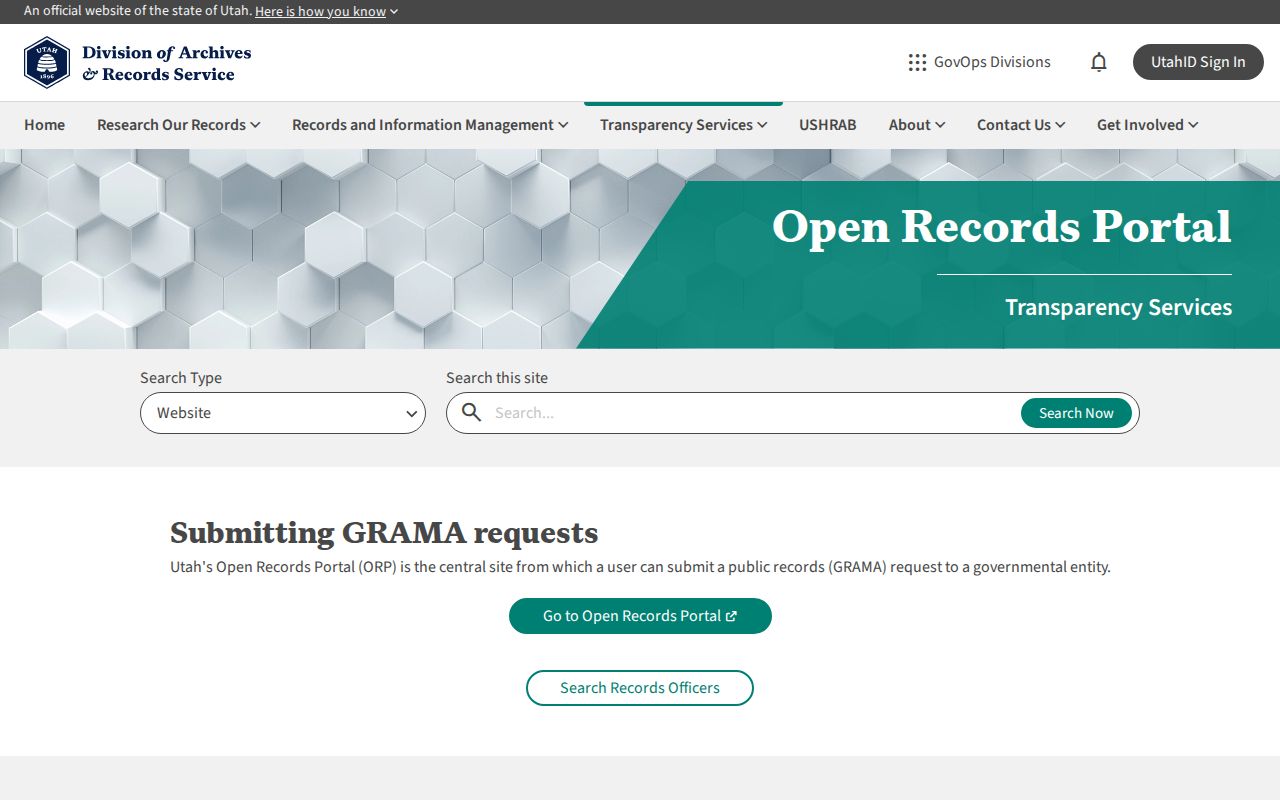
The portal image reinforces that a request is directed to a custodian and is not a name-search database.
Mapping a Logan Block: Parcels and Owners
Use the current GIS viewer to search by tax ID or address, zoom, pan, and open the parcel cards around the starting point. A card can show owner, owner mailing address, property address, tax district, legal acreage, year built, zone, and legal description. CORE can cross-check the tax year and name or street query. The sample card in the research uses parcel 06-019-0009 and an Old Historic Cache County Courthouse description. It is an interface example, not a typical block or a current resident fact.
- Validate the street address and delivery type with USPS AIS.
- Open the parcel in Cache GIS and save the tax ID, situs, and map date.
- Inspect adjacent parcels without copying protected or unnecessary fields.
- Use CORE and the Recorder when an owner or deed question needs confirmation.
- Write the result as “parcel shown on date” rather than “neighbor lives here.”
The county is moving from Web AppBuilder to Experience Builder. Legacy maintenance is planned for Q4 2026 and retirement is targeted for Q2 2027. A map transition can alter the screen without changing the underlying deed.
Logan Planning Areas Are Not Rosters
Logan’s parks and open-space plan names six neighborhood areas organized around elementary-school geography: Adams, Bridger, Ellis, Hillcrest, Wilson, and Woodruff. Adams has a neighborhood-specific plan from 2012. The plans discuss land use, transportation, site design, parks, environmental sensitivity, and economic development based on stakeholder input. They do not function as verified association directories.
| Area | How it helps a block question |
|---|---|
| Adams | Planning context; 2012 plan lead |
| Bridger | Named city planning geography |
| Ellis | Named city planning geography |
| Hillcrest | Named city planning geography |
| Wilson | Named city planning geography |
| Woodruff | Named city planning geography |
Research did not locate a current official umbrella directory for Logan neighborhood associations. Use the city plan for planning terms and ask a verified organization about public meetings. Do not infer who belongs to an area from a school geography or street location.
Public Filings Near a Logan Address
Business and license records can describe an entity near a block without identifying a neighbor. Utah’s business list filters entity type, NAICS, ZIP, registration or expiration dates, and status. Its output can include entity number, name, address, status, renewal, applicant, principals, members, position, and filed documents. A registered agent is a filing contact, not necessarily a resident. DOPL verifies a credential, while the Construction Business Registry displays only active licensees who opted in.
The inspected Logan permit portal shows “Enter Permit Name,” Search, and Filter controls, with Adams Residential Permit 2025–2026 and Hillcrest Residential Permit 2025–2026 examples. It appears to handle parking or residential permit transactions, not a complete building-permit index. The statewide building-permit list can accept ZIP and date filters, but local submissions may be incomplete or delayed. Name the issuing municipality before relying on a project result.
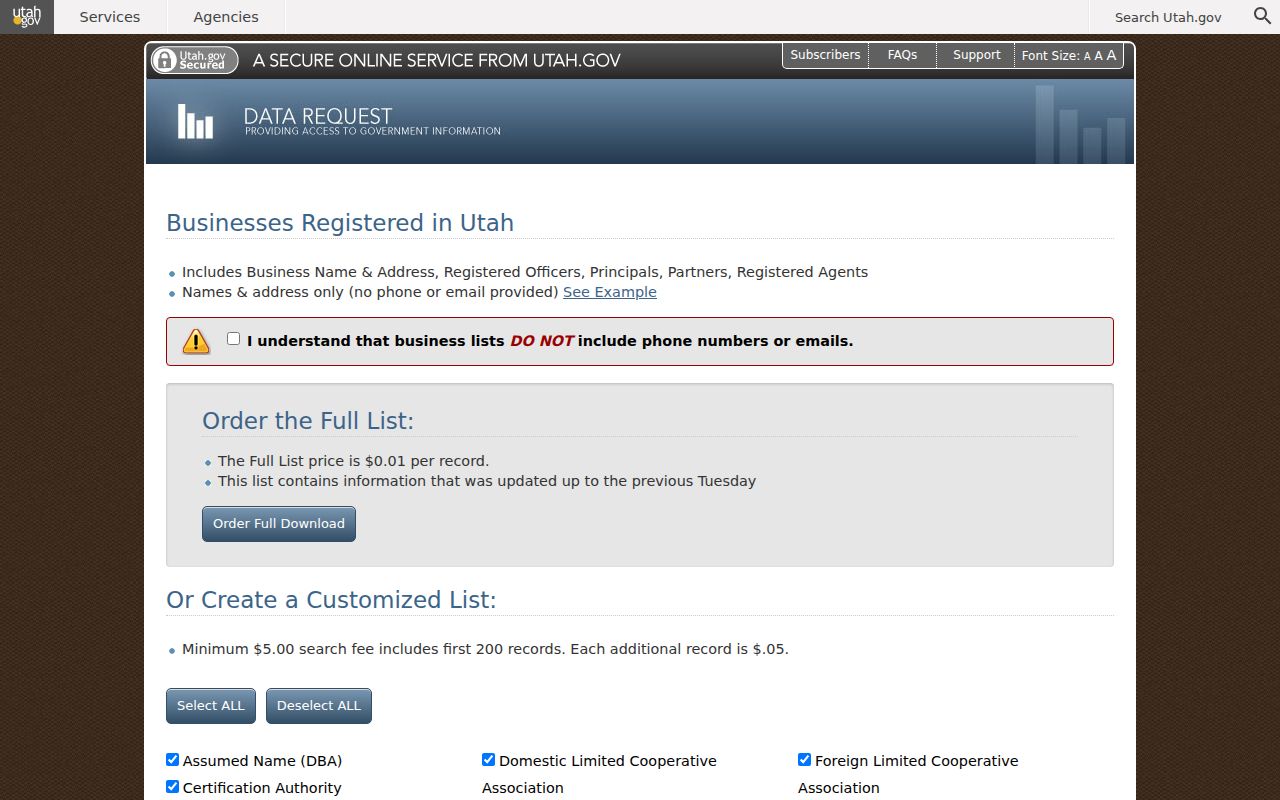
The business-list capture shows filters for a public entity dataset, not a list of Logan households.
Community Records Around Logan Blocks
Community information can add public context without becoming a resident directory. City planning documents, council minutes, ordinances, and public meeting notices may describe a project or neighborhood issue. The Cache Clerk handles county minutes, resolutions, ordinances, elections, licenses, annexation material, and GRAMA routing. Logan city records use the city Records Officer. A county record does not automatically cover a city record.
For a specific document, Utah GRAMA requests should name the agency, record type, date range, address, permit number, or meeting. The request can be sent through the Open Records Portal, email, fax, mail, or in person. Utah materials describe actual-cost fees and a response framework of up to ten business days. A request is not a question and cannot bypass private or protected classifications.
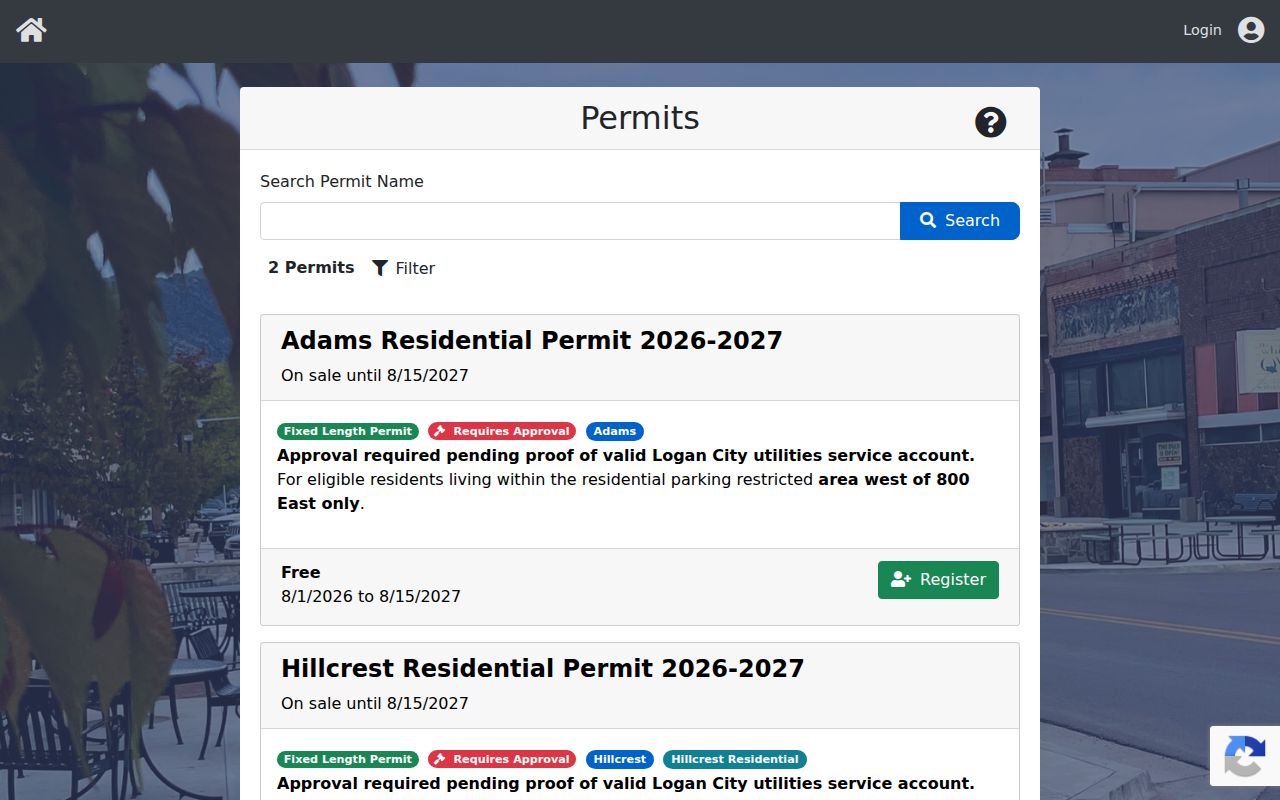
This city-portal image is useful precisely because it does not support a claim of comprehensive building-permit coverage.
Voter Privacy on a Logan Block
Utah voter information may include public name, physical or mailing address, age range, party affiliation, and vote history. Vote history means which elections included participation, not candidate choice. Date of birth, ID number, Social Security number, email, phone, and signature are protected. At-Risk voters can be withheld or anonymized. A block map or contact list built from voter data would defeat the narrow purpose of the record and should not be made.
Safe at Home adds a stronger warning. Actual home and mailing address, city, county, precinct, phone, and identifying details are confidential for eligible participants. A substitute address is not the same as a home location. Certified program assistants are found through safety-sensitive routing, not by correcting a public map.
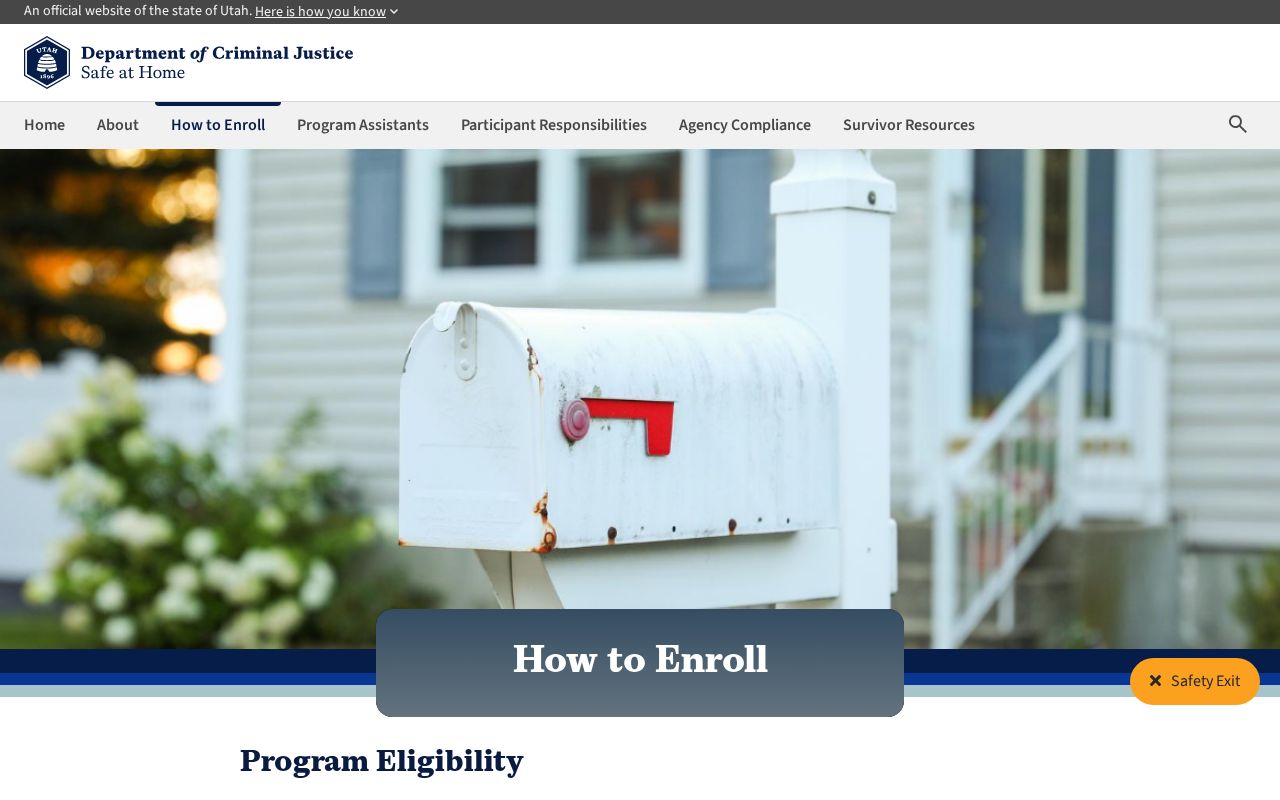
The Safe at Home capture shows why a protected address must remain protected, even when a block lookup seems to invite more detail.
Official Rolls Versus Neighbor Tools
Official records have a named custodian, defined fields, and access limits. Commercial people-search tools are not named or linked here, and they should not be treated as a better source. They may blend stale addresses or unrelated names, while an official parcel card, voter record, or business filing has a narrower meaning. Neither category gives permission to contact or publish a person’s address.
| Question | Better evidence | Why |
|---|---|---|
| Which parcel touches this one? | Current Cache GIS | Map geometry and date are visible |
| Who is the recorded owner? | CORE, Assessor, Recorder | Owner and deed fields have a custodian |
| Is there a public city record? | Logan Records Officer / GRAMA | Agency can classify and redact |
| Is a business filing nearby? | Utah entity list or DOPL | Filing role is defined |
The right source is often less complete than a commercial promise, but it is easier to describe honestly. Use the parcel, date, source, and field name. Leave out protected addresses, private family details, and exact information that does not serve the research purpose.
Privacy Limits on a Neighbor Lookup
A Logan neighbor lookup can show adjacent parcels, public planning geography, dated filings, or a lawful public record. It cannot prove who lives in a home, who is safe to approach, or that a mailing address is a residence. The Recorder’s open-inspection rule does not require republishing every field. Current, private, sealed, protected, vital, and Safe at Home information remains subject to its own custodian.
Use the block carefully. Do not stalk, harass, intimidate, threaten, dox, or repeatedly contact anyone based on Logan records. If someone faces immediate danger, use emergency services. For an inaccurate record, use the agency’s correction route.
Utah stalking law addresses repeated conduct that causes reasonable fear or emotional distress. The safest finish to a neighbor search is a source note, not a name list. For a full street record chain, use the Logan by-street workflow; for one historic household, use the dated city directory and deed path.
Construction Credentials Near Logan
The Utah Construction Business Registry has Basic and Advanced Search controls for professional type, classification or scope, company name, license number, city, state, and ZIP. It displays only active licensees who opted in. That narrow rule matters when reading a block result. An absent company in the CBR is not proof that no license exists in another DOPL system.
Use the registry to understand a public credential or company filing, not to infer where an individual lives. DOPL’s license search and the business entity list have different scopes and roles. Keep the license number, status, classification, and date with the result, and send a current or disputed question to DOPL.
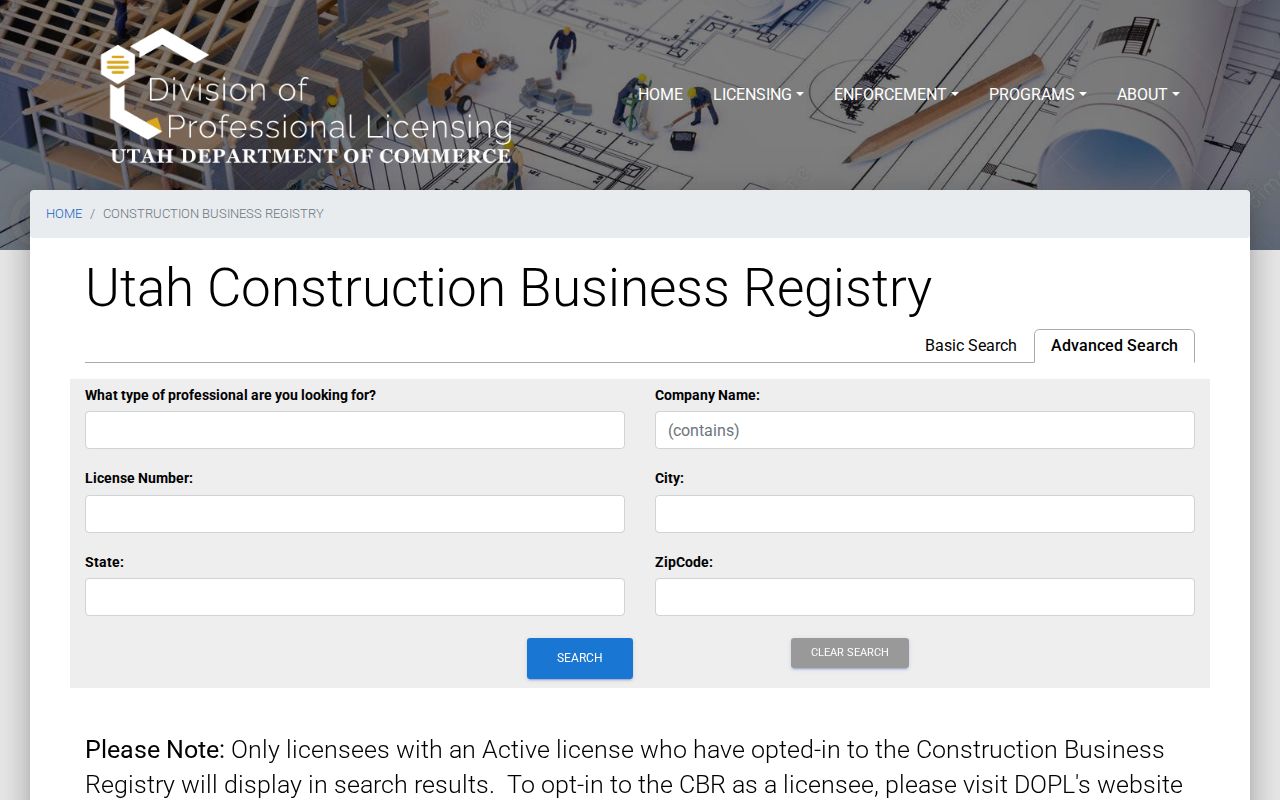
The registry capture shows a filtered professional dataset, which is useful context for public activity near a Logan block but not a private neighbor list.